DATA SYSTEMS
Connecting interests to career paths
A graduate-major and occupation recommendation prototype that connects survey responses with O*NET occupational data.
Connecting survey responses with structured career data
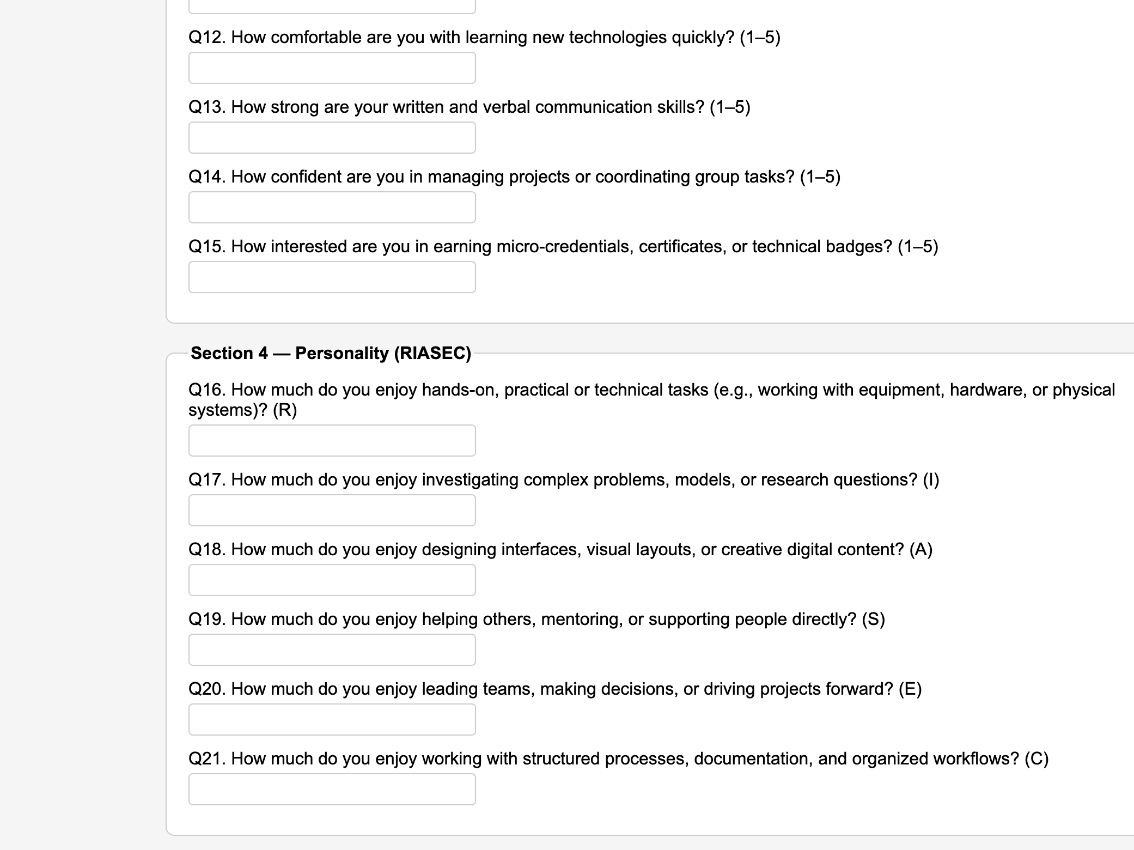
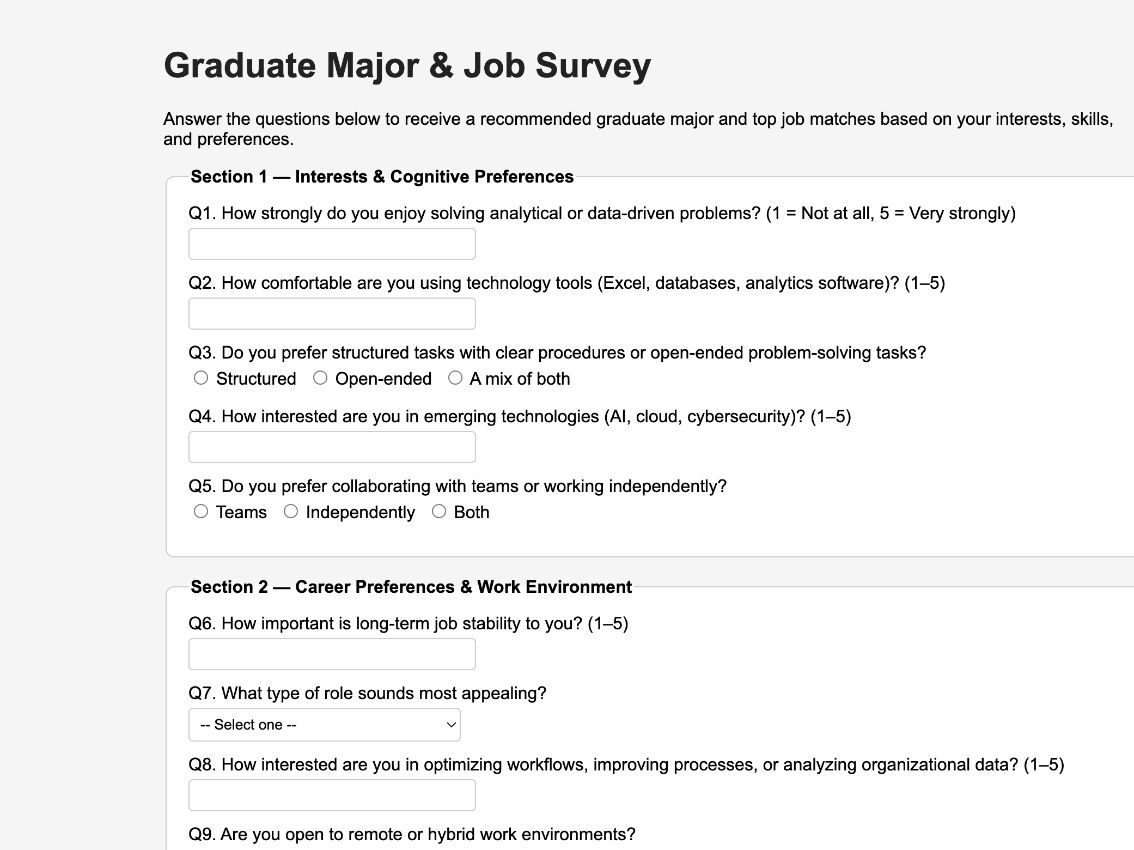
The prototype explores a path from a person’s stated interests and skills to possible graduate study and occupational directions. O*NET data provides a structured vocabulary for occupations, skills, and knowledge, while the survey gathers the inputs used by the application.
The project separates data import and relational storage from the recommendation logic. Its scoring engine combines interest similarity with skills and preferences for occupation matching; a separate rule maps a preferred role to a graduate-major suggestion. The small example below isolates that rule so its behavior is easy to inspect.
The work
Built around a survey interface, relational data models, and import scripts for occupations, skills, and knowledge. A custom scoring engine combines interest similarity with skills and preference matching.
The output
Ranked occupation matches, rule-based graduate-major suggestions, and an administrative view of submissions. The prototype demonstrates an end-to-end data-to-application workflow.
From interests to a major
Choose an area of interest and watch the suggested major change. This is the role-to-major rule from the project, not a personalized career assessment. The original survey images show the broader inputs used by the complete prototype, including work preferences, skill self-assessment, and RIASEC interests. No survey responses are submitted here.